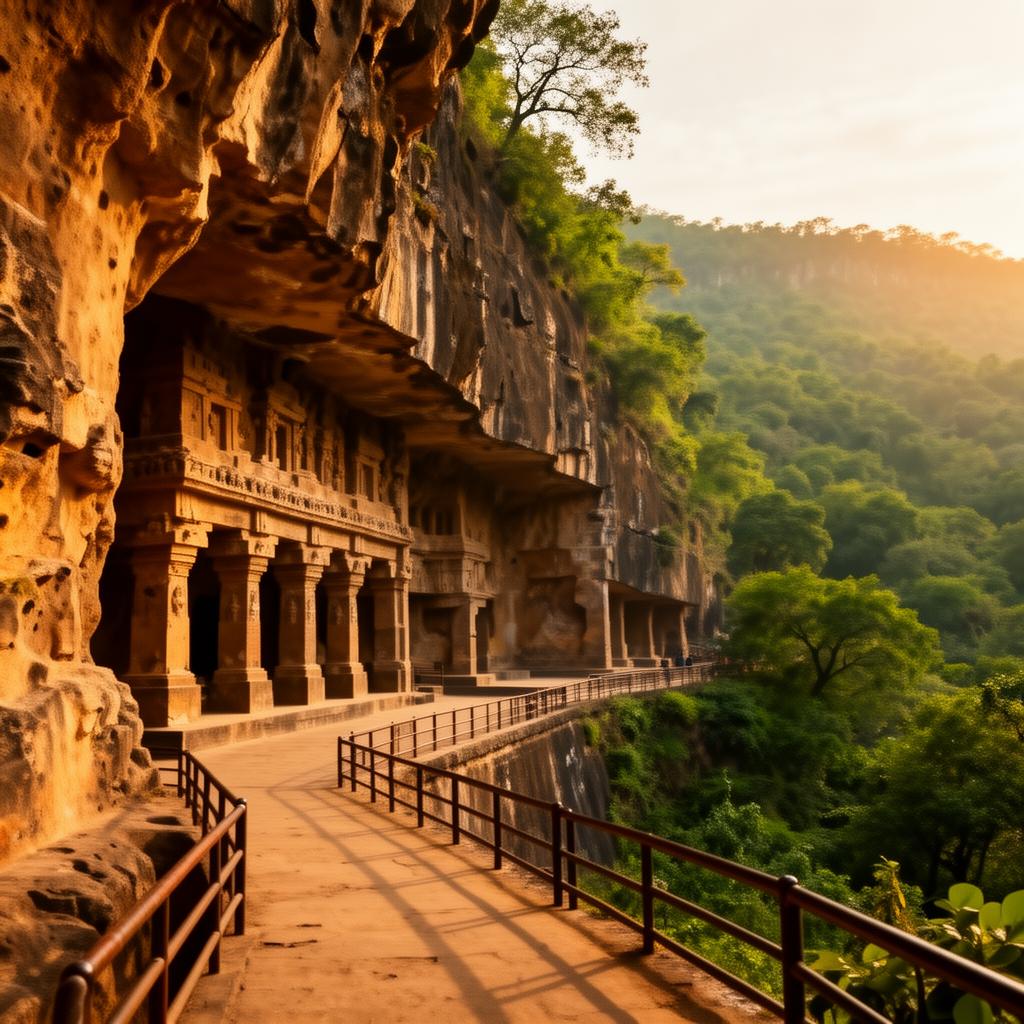
Udayagiri & Khandagiri
HeritageUdayagiri and Khandagiri are twin hills located on the outskirts of Bhubaneswar, Odisha, renowned for their ancient rock-cut caves that bear testimony to the rich Jain heritage and early Indian rock-cut architecture. Dating back to the 2nd century BCE, these caves were primarily residential blocks (cells) for Jain ascetics.
About Udayagiri & Khandagiri
Udayagiri and Khandagiri are twin hills located on the outskirts of Bhubaneswar, Odisha, renowned for their ancient rock-cut caves that bear testimony to the rich Jain heritage and early Indian rock-cut architecture. Dating back to the 2nd century BCE, these caves were primarily residential blocks (cells) for Jain ascetics. Udayagiri, meaning 'Hill of Sunrise,' is the larger of the two, boasting 18 caves, while Khandagiri, or 'Broken Hill,' has 15 caves. The most famous cave in Udayagiri is the Hathi Gumpha (Elephant Cave), which contains the Hathigumpha inscription, a seventeen-line inscription written by King Kharavela of the Kalinga kingdom. The caves are adorned with intricate carvings depicting daily life, religious rituals, and mythological scenes, offering a fascinating glimpse into the social and artistic life of ancient Odisha. These historical sites are maintained by the Archaeological Survey of India and are a must-visit for history buffs and spiritual seekers alike.
History
The history of Udayagiri and Khandagiri caves is intrinsically linked to King Kharavela of the Mahameghavahana dynasty, who ruled Kalinga (ancient Odisha) in the 2nd century BCE. The Hathigumpha inscription, located in Udayagiri, is a primary source of information about Kharavela's reign, his military conquests, and his patronage of Jainism. It is considered one of the most important epigraphical records in India. The caves were carved out of laterite rock during Kharavela's time and by his successors, serving as shelters for Jain monks. The architectural style reflects the early rock-cut tradition, with simple yet elegant structures and often intricately carved facades. While the caves are predominantly Jain, evidence suggests that the site may have been used by other religious groups over time. The historical significance of these caves lies not only in their religious context but also in the detailed sculptural narratives that portray the social, cultural, and political landscape of ancient Kalinga. They stand as a remarkable example of ancient Indian engineering and artistic prowess.
Highlights
- Explore the Hathigumpha (Elephant Cave) in Udayagiri with its ancient inscription.
- Marvel at the intricate carvings in Rani Gumpha (Queen's Cave), one of the largest and most ornate.
- Discover the Ganesha Gumpha with its sculpture of a seated Ganesha.
- Ascend Khandagiri Hill for panoramic views of Bhubaneswar city.
- Visit the Jain Temple on top of Khandagiri Hill.
- Observe the various smaller caves like Bagh Gumpha (Tiger Cave) and Surya Gumpha.
- Learn about ancient Jain traditions and monastic life.
- Appreciate the early Indian rock-cut architectural styles.
- Photograph the historical sculptures and natural surroundings.
Visitor Information
Plan your visit to Udayagiri & Khandagiri.
Discover the heritage and culture of India.