Sonepur Mela
PilgrimageThe Sonepur Mela, also known as the Harihar Kshetra Mela, is Asia's largest cattle fair, held annually at Sonepur in Bihar, India. Situated at the confluence of the sacred rivers Ganga and Gandak, this historic fair attracts millions of visitors from across the globe.
About Sonepur Mela
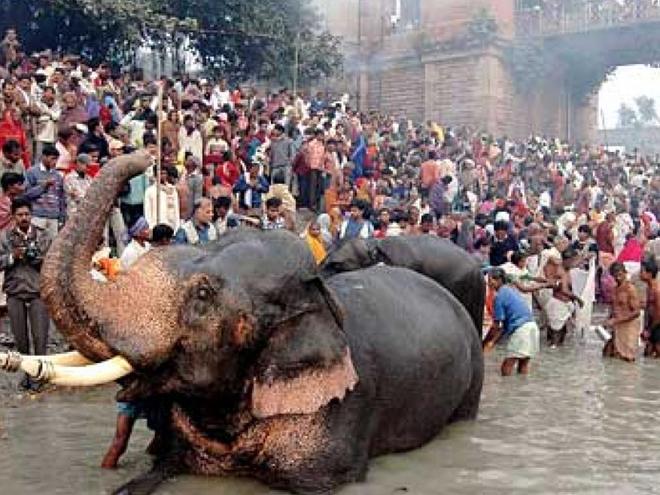
The Sonepur Mela, also known as the Harihar Kshetra Mela, is Asia's largest cattle fair, held annually at Sonepur in Bihar, India. Situated at the confluence of the sacred rivers Ganga and Gandak, this historic fair attracts millions of visitors from across the globe. While its primary focus is the trading of livestock, including elephants, camels, horses, and various cattle, the Sonepur Mela is much more than just a marketplace. It's a vibrant cultural spectacle, a melting pot of traditions, and a deeply religious event. Pilgrims come to take a holy dip at the confluence of the rivers, believing it cleanses them of sins. Beyond the devout, the fair offers a kaleidoscope of entertainment ranging from traditional folk performances, magic shows, acrobatic displays, and Ferris wheels to a bustling array of street food vendors and handicraft stalls. The air is filled with the sounds of animal calls, fervent prayers, and the laughter of families, creating an unforgettable sensory experience. It's a place where ancient customs intertwine with modern commerce, showcasing the rich tapestry of rural Indian life.
History
The Sonepur Mela boasts a history that stretches back millennia, with its origins deeply rooted in Hindu mythology and ancient traditions. Legend has it that the fair began when Lord Brahma himself visited the confluence of the Ganga and Gandak rivers to bathe and establish the Harihar Nath temple. Historical accounts suggest that Chandragupta Maurya, one of India's greatest emperors, used to procure elephants and horses from the Sonepur region for his army, indicating the fair's long-standing importance as a trading hub for animals. During the medieval period, the Mughal emperors and later the British East India Company also recognized the strategic and economic significance of the Sonepur Mela, actively participating in its trade and sometimes even setting up administrative camps. The fair has traditionally been a crucial platform for farmers and traders to exchange livestock, particularly elephants, which were historically prized for war and ceremonies. Over centuries, while its core purpose of animal trade remains, the mela has evolved into a grand cultural and religious congregation, adapting to changing times while preserving its ancient essence. The Harihar Nath Temple, dedicated to Lord Vishnu and Shiva, stands as a central pillar of the fair, attracting countless devotees.
Highlights
- Witness Asia's largest cattle fair, featuring elephants, horses, and camels.
- Take a holy dip at the confluence of the Ganga and Gandak rivers.
- Visit the ancient Harihar Nath Temple.
- Experience vibrant folk dances, music, and cultural performances.
- Explore the bustling street markets for handicrafts and local goods.
- Enjoy traditional circus acts and magic shows.
- Indulge in a variety of local Bihari street food.
- Observe rural Indian life and traditional animal trading practices.
- Capture stunning photographs of the colorful festivities.
- Attend the religious ceremonies and aartis at the riverbanks.
Visitor Information
Plan your visit to Sonepur Mela.
Discover the heritage and culture of India.