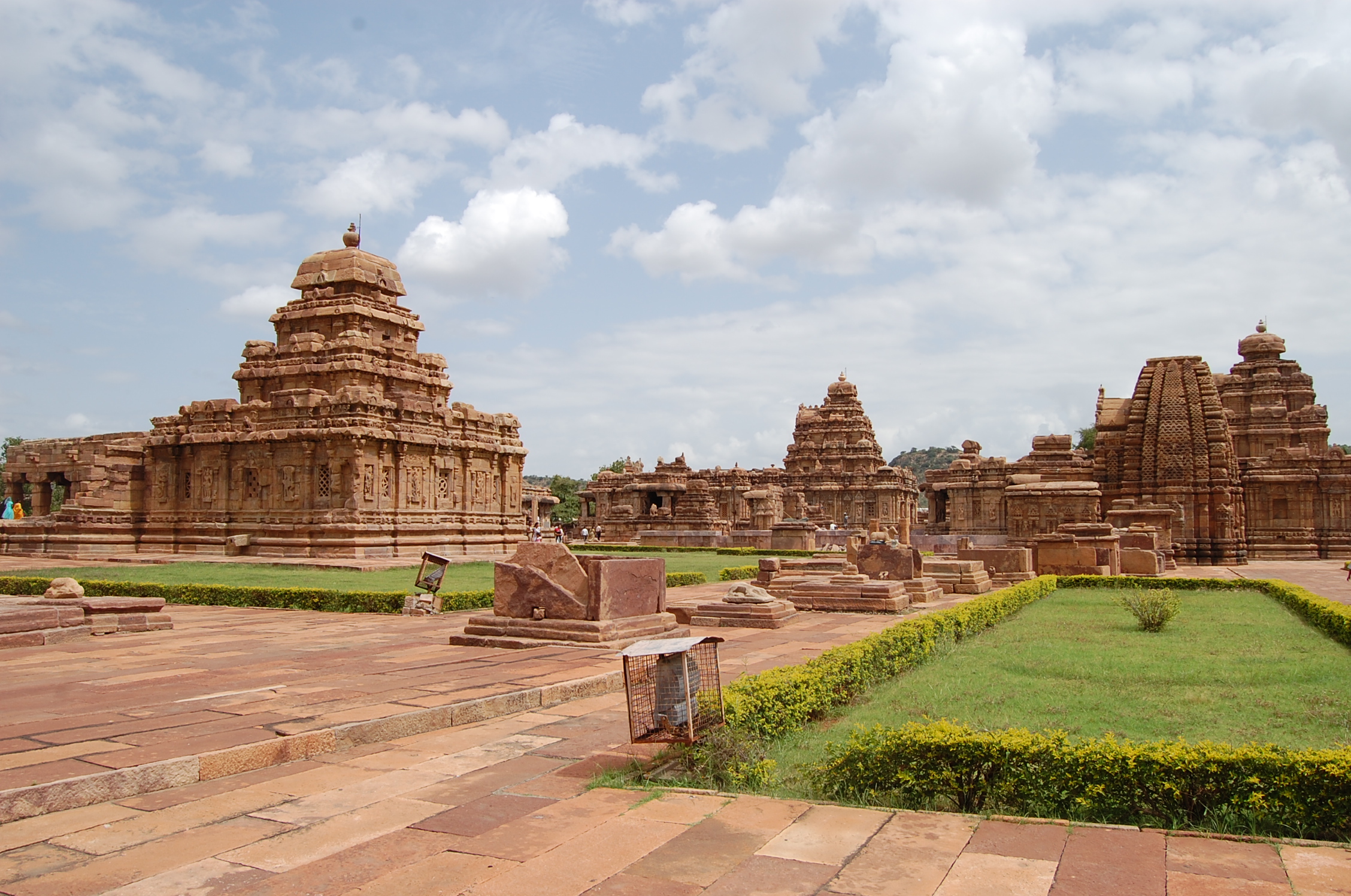
Pattadakal
HeritagePattadakal, a UNESCO World Heritage site in Karnataka, India, is a breathtaking testament to the architectural prowess of the Chalukya dynasty. This complex of Hindu and Jain temples, built between the 7th and 8th centuries, showcases a unique fusion of North Indian (Nagara) and South Indian (Dravidian) architectural styles.
About Pattadakal
Pattadakal, a UNESCO World Heritage site in Karnataka, India, is a breathtaking testament to the architectural prowess of the Chalukya dynasty. This complex of Hindu and Jain temples, built between the 7th and 8th centuries, showcases a unique fusion of North Indian (Nagara) and South Indian (Dravidian) architectural styles. It served as the coronation site for the Chalukyan kings, adding to its historical significance. The intricate carvings on the temple walls depict scenes from Hindu mythology, daily life, and geometric patterns, offering a fascinating glimpse into the artistic and cultural landscape of the era. Visitors can wander through a collection of large, beautifully preserved temples, each with its own distinct charm and story. The serene atmosphere, coupled with the grandeur of the structures, makes Pattadakal a truly captivating destination for history buffs and architecture enthusiasts alike.
History
Pattadakal's history is deeply intertwined with the powerful Chalukya dynasty, who ruled this region from the 6th to the 8th centuries. It was designated as their 'second capital' and, crucially, served as the site for royal coronations (Pattadakal literally means 'Coronation Stone'). The construction of the magnificent temples here began in the 7th century, a period of significant artistic and architectural advancement. The site flourished under kings like Vikramaditya II, whose two queens, Lokamahadevi and Trailokamahadevi, commissioned the Virupaksha and Mallikarjuna temples respectively, to commemorate the king's victory over the Pallavas. These temples, along with others like the Papanatha and Kashivishvanatha, demonstrate a remarkable experimentation and melding of various architectural traditions. The decline of the Chalukyas in the 8th century led to a period of reduced activity, but the temples have largely withstood the test of time, offering invaluable insights into ancient Indian craftsmanship and religious practices.
Highlights
- Marvel at the Virupaksha Temple, a masterpiece of Dravidian architecture.
- Explore the Papanatha Temple, showcasing a blend of Nagara and Dravidian styles.
- Admire the exquisite carvings on the Mallikarjuna Temple.
- Visit the Jain Narayana Temple, the only Jain temple in the complex.
- Discover the Kashi Vishwanatha Temple's unique architectural features.
- Walk by the Sangameshwara Temple, one of the earliest temples at the site.
- Observe the intricate details of the sculptural work depicting Hindu mythology.
- Witness the Chalukyan art and craftsmanship firsthand.
- Enjoy the serene and historically rich atmosphere.
- Photograph the well-preserved ancient temple complex.
Visitor Information
Plan your visit to Pattadakal.
Discover the heritage and culture of India.