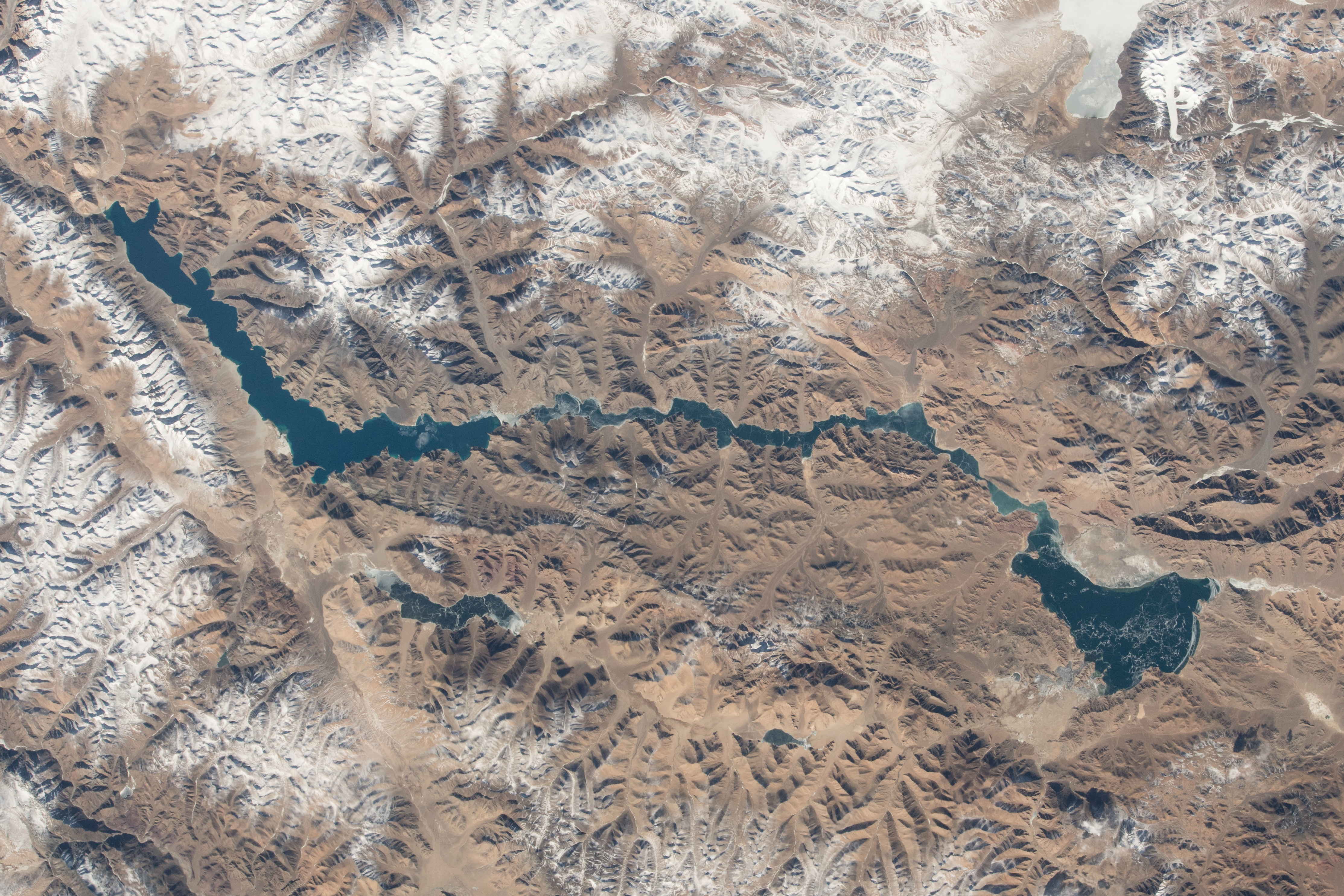
Pangong Tso
LakePangong Tso, meaning 'high grassland lake' in Tibetan, is an endorheic lake spanning the border between India and China, nestled in the Himalayas at an altitude of approximately 4,225 meters (13,862 ft). Renowned for its breathtaking beauty, the lake's most striking feature is its ever-changing turquoise and blue hues, shifting with the sun's position.
About Pangong Tso
Pangong Tso, meaning 'high grassland lake' in Tibetan, is an endorheic lake spanning the border between India and China, nestled in the Himalayas at an altitude of approximately 4,225 meters (13,862 ft). Renowned for its breathtaking beauty, the lake's most striking feature is its ever-changing turquoise and blue hues, shifting with the sun's position. The stark, arid mountains surrounding the placid waters create a dramatic and awe-inspiring landscape. While about one-third of the lake lies within India (with the remaining two-thirds in China), the Indian side, particularly near Spangmik village, is a popular tourist destination. The serene environment, crisp mountain air, and the sheer scale of the lake make it a truly unforgettable experience, often leaving visitors speechless. It is also famous as a filming location for several Bollywood movies, further enhancing its appeal.
History
Pangong Tso's history is largely intertwined with the geological formation of the Himalayas and the ancient trade routes that once traversed this mountainous region. The lake has been a natural boundary and a point of strategic importance for centuries, witnessing the movements of nomadic communities and various empires. Historically, the Changpa nomads, indigenous to the Changthang plateau, have grazed their pashmina goats and other livestock in the surrounding grasslands. In more recent times, Pangong Tso gained significant international attention due to its geopolitical significance. The Line of Actual Control (LAC) between India and China passes through the lake, making it a sensitive border area. The lake has been a point of contention and discussion in border negotiations between the two nations, highlighting its strategic value beyond its natural splendor. Its recent popularity as a tourist destination has added another layer to its narrative, attracting visitors eager to witness its unique beauty and understand its geographical context.
Highlights
- Witness the mesmerizing changing colors of the lake
- Click iconic photographs with the lake in the background
- Stay overnight in lakeside camps or guesthouses
- Spot migratory birds during specific seasons
- Enjoy the serene and tranquil mountain environment
- Visit Spangmik village for local culture and food
- Drive through scenic mountain passes like Chang La
Visitor Information
Plan your visit to Pangong Tso.
Discover the heritage and culture of India.