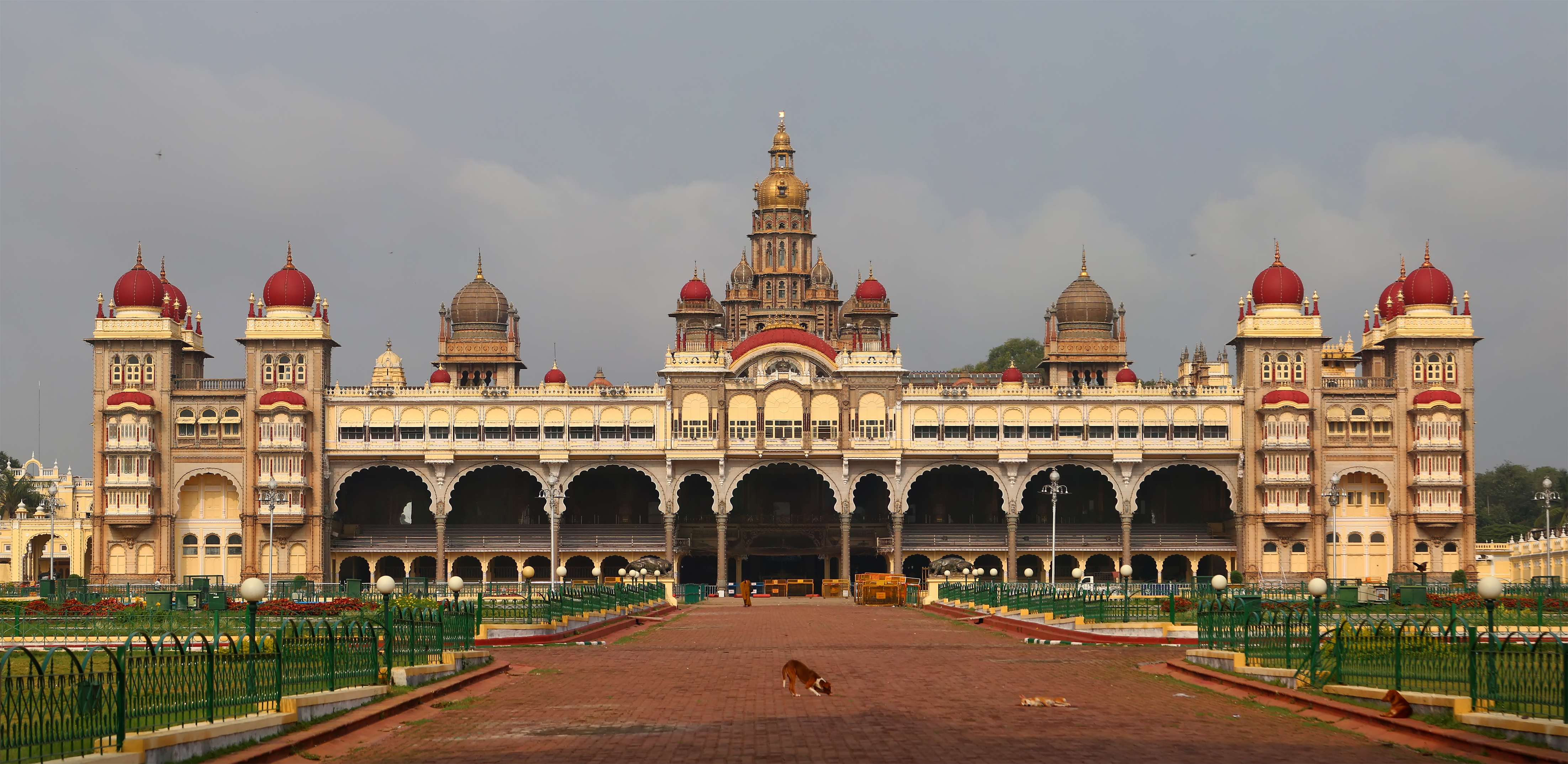
Mysore Palace
HeritageMysore Palace, officially known as Amba Vilas Palace, is a historical palace and a royal residence at Mysore in the Indian State of Karnataka. It is the official residence of the Wadiyar dynasty and the seat of the Kingdom of Mysore.
About Mysore Palace
Mysore Palace, officially known as Amba Vilas Palace, is a historical palace and a royal residence at Mysore in the Indian State of Karnataka. It is the official residence of the Wadiyar dynasty and the seat of the Kingdom of Mysore. The palace is in the center of Mysore, facing the Chamundi Hills eastward. It is one of the most famous tourist attractions in India, after the Taj Mahal, and is considered one of the finest examples of Indo-Saracenic architecture. The palace complex includes a series of temples, courtyards, and gardens, each contributing to its grandeur. The intricate artistry, the use of precious materials, and the sheer scale of the palace make it a truly awe-inspiring sight. Visitors are mesmerized by the vibrant frescoes, ornate ceilings, and magnificent doorways. The palace comes alive every Sunday and during public holidays when more than 97,000 bulbs illuminate its facade, creating a dazzling spectacle.
History
The present Mysore Palace is the fourth palace to be built on the same site. The first palace was constructed by Chamaraja Wodeyar III in the 14th century. Over the centuries, it was rebuilt and modified multiple times. The current palace was commissioned by Maharaja Krishnaraja Wodeyar IV after the old palace was destroyed by a fire during the wedding of Princess Jayalakshammanni in 1897. British architect Henry Irwin was tasked with designing the new palace. Construction began in 1897 and was completed in 1912. The construction cost was approximately 4.15 million rupees at that time. The palace combines Hindu, Mughal, Rajput, and Gothic styles, an architectural style now termed as Indo-Saracenic. The Wadiyar dynasty ruled Mysore from 1399 to 1950, except for a brief period in the late 18th century when Hyder Ali and Tipu Sultan were in power. The palace stands as a testament to the rich history and cultural heritage of the Kingdom of Mysore.
Highlights
- Witness the illuminated palace on Sundays and public holidays
- Explore the Public Durbar Hall with its ornate columns and paintings
- Visit the Ambavilasa, a beautifully decorated private assembly hall
- Admire the intricate carvings and stained glass windows
- Discover the collection of royal paintings and artifacts in the museum
- Stroll through the well-maintained palace gardens
- See the Golden Howdah, used during the Dasara procession
- Observe the many Hindu temples within the palace complex
Visitor Information
Plan your visit to Mysore Palace.
Discover the heritage and culture of India.