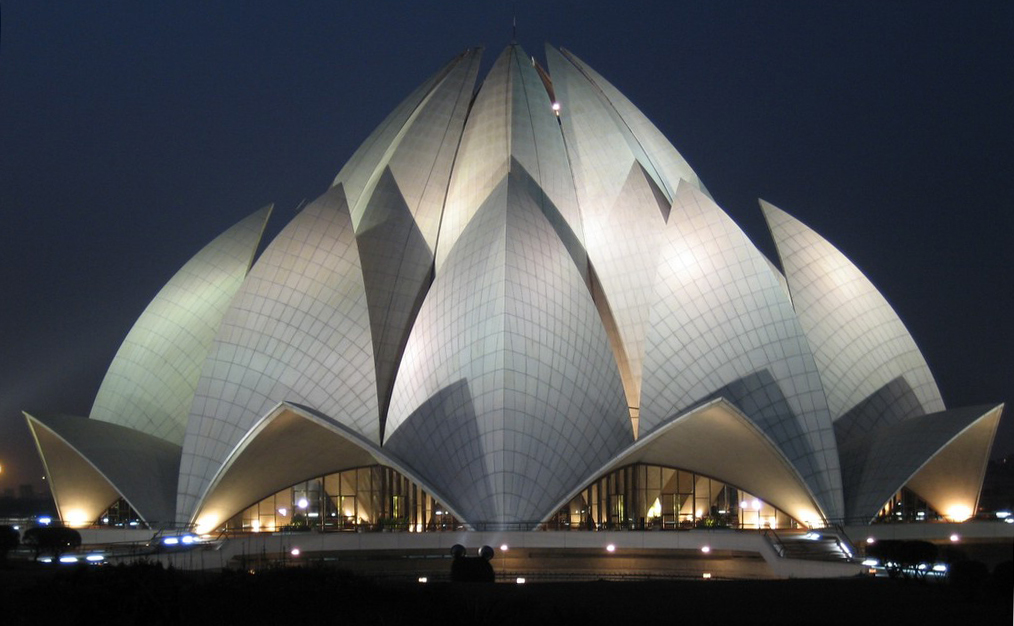
Lotus Temple
TempleThe Lotus Temple, located in Delhi, India, is a remarkable architectural marvel and a House of Worship open to all, regardless of religion or ethnicity. Its design, inspired by the lotus flower, symbolizes purity, peace, and universality, welcoming people from all walks of life to meditate, pray, and reflect.
About Lotus Temple
The Lotus Temple, located in Delhi, India, is a remarkable architectural marvel and a House of Worship open to all, regardless of religion or ethnicity. Its design, inspired by the lotus flower, symbolizes purity, peace, and universality, welcoming people from all walks of life to meditate, pray, and reflect. The temple's striking form consists of 27 free-standing marble-clad petals arranged in clusters of three, forming nine sides, with nine doors opening onto a central hall. This unique structure allows natural light to filter in, creating a serene and uplifting atmosphere. Surrounded by lush green gardens and nine shimmering ponds, the temple offers a tranquil escape from the bustling city, inviting visitors to experience moments of quiet contemplation and spiritual upliftment. It has become not only a significant place of worship but also a globally recognized landmark of modern Indian architecture.
History
The Lotus Temple, a Baháʼí House of Worship, was consecrated on December 23, 1986, and officially opened to the public on December 24, 1986. The concept for the Baháʼí Faith's houses of worship, known as Mashriqu'l-Adhkár, emphasizes a building where people of all religions can come together to worship God. The design for the Delhi temple was conceived by Iranian architect Fariborz Sahba, who drew inspiration from the lotus flower, a symbol of purity and divinity in various Indian religions. Construction began in 1976 and took ten years to complete, employing more than 800 engineers, technicians, and workers. The primary materials used were white marble from Penteli mountain in Greece, the same marble used in many ancient monuments, including the Parthenon. This iconic structure has since garnered numerous architectural awards and is one of the most visited buildings in the world, embodying the Baháʼí principle of the unity of religions.
Highlights
- Admire the unique lotus-shaped architecture
- Experience the serene and contemplative atmosphere
- Stroll through the beautiful surrounding gardens
- Sit in quiet meditation or prayer in the central hall
- Learn about the Baháʼí Faith's principles of unity
- Capture stunning photographs of the iconic structure
- Enjoy the calming effect of the nine reflective ponds
- Witness a beacon of interfaith harmony
Visitor Information
Plan your visit to Lotus Temple.
Discover the heritage and culture of India.