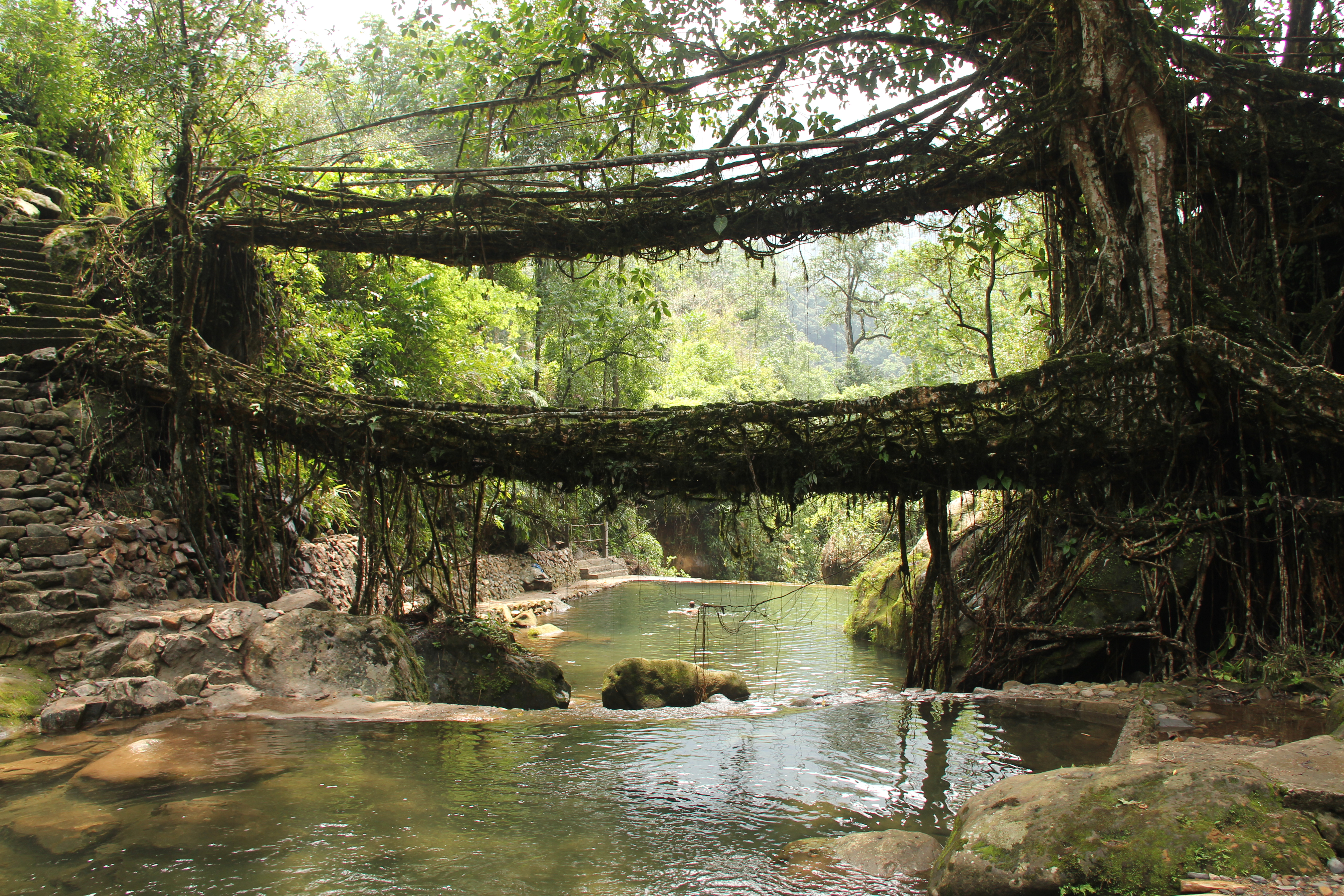
Living Root Bridges
AdventureThe Living Root Bridges of Meghalaya are an extraordinary example of bioengineering and indigenous wisdom, unique to the Khasi and Jaintia tribes of the state. These natural wonders are formed by guiding the aerial roots of the Ficus elastica tree (Indian rubber tree) across rivers and streams using betel nut trunks, bamboo, or other natural materials.
About Living Root Bridges
The Living Root Bridges of Meghalaya are an extraordinary example of bioengineering and indigenous wisdom, unique to the Khasi and Jaintia tribes of the state. These natural wonders are formed by guiding the aerial roots of the Ficus elastica tree (Indian rubber tree) across rivers and streams using betel nut trunks, bamboo, or other natural materials. Over decades, these roots intertwine, grow, and strengthen, eventually forming robust, living bridges that can support the weight of numerous people. Some bridges are hundreds of years old and continue to grow stronger over time. They are not built but grown, making them an incredibly sustainable and resilient infrastructure, adapting and mending themselves naturally. Visitors are often awe-struck by the sheer ingenuity and the tranquil, verdant surroundings of these natural marvels, which are deeply integrated into the local culture and ecosystem.
History
The practice of growing Living Root Bridges has been passed down through generations by the indigenous Khasi and Jaintia tribes of Meghalaya, with some bridges estimated to be over 500 years old. The precise origins are not fully documented in written history, but oral traditions suggest the technique was developed out of necessity to cross treacherous rivers and streams during the monsoon season, when conventional wooden bridges would quickly rot or be washed away. The Ficus elastica tree, abundant in the region, was discovered to have strong, flexible aerial roots that could be manipulated. Initially, hollowed-out betel nut trunks or bamboo frames were used as guiding channels for the young roots. Over time, these roots would attach themselves to river banks and grow, strengthening with each passing year. This symbiotic relationship with nature reflects a deep understanding of the local environment and a sustainable approach to resource management. The bridges are not just structures; they are living testaments to the tribes' harmony with nature and their remarkable innovative spirit.
Highlights
- Trek to the iconic Double Decker Living Root Bridge in Nongriat village.
- Explore the single root bridges like those near Riwai village.
- Witness the intricate bioengineering marvel of these natural structures.
- Swim in natural pools often found near the root bridges.
- Experience the serene beauty of Meghalaya's lush rainforests.
- Interact with friendly local Khasi communities.
- Visit Mawlynnong, often called 'Asia's Cleanest Village'.
- Enjoy the breathtaking viewpoints and waterfalls in the surrounding areas.
- Capture stunning photographs of unique botanical architecture.
- Learn about sustainable living practices of indigenous tribes.
Visitor Information
Plan your visit to Living Root Bridges.
Discover the heritage and culture of India.