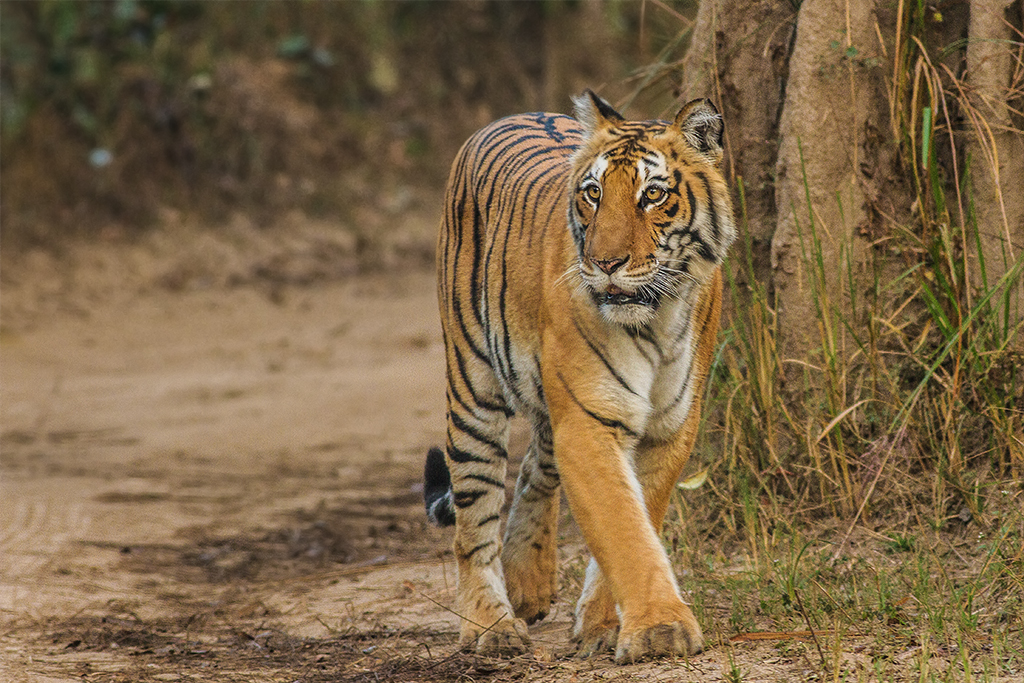
Jim Corbett National Park
National ParkJim Corbett National Park, nestled in the footfalls of the Himalayas in Uttarakhand, is India's oldest national park and a pioneering tiger reserve under Project Tiger. Established in 1936 as Hailey National Park, it was later renamed in honor of the legendary hunter-turned-conservationist Jim Corbett.
About Jim Corbett National Park
Jim Corbett National Park, nestled in the footfalls of the Himalayas in Uttarakhand, is India's oldest national park and a pioneering tiger reserve under Project Tiger. Established in 1936 as Hailey National Park, it was later renamed in honor of the legendary hunter-turned-conservationist Jim Corbett. The park is renowned for its rich biodiversity, encompassing dense Sal forests, grasslands, and a diverse range of flora and fauna. Beyond the majestic Bengal tiger, it's home to elephants, leopards, sloth bears, various species of deer, and over 600 species of birds, making it a birdwatcher's paradise. The serene Ramganga River meanders through the park, adding to its picturesque landscape. Visitors can explore its different zones, including Dhikala, Bijrani, Jhirna, Dhela, and Durgadevi, each offering unique wildlife viewing opportunities through jeep safaris and elephant rides. This wilderness sanctuary provides an unparalleled experience for nature enthusiasts and wildlife photographers, offering a glimpse into the raw beauty of India's natural heritage.
History
Jim Corbett National Park boasts a storied history, dating back to 1936 when it was established as Hailey National Park, making it the first national park in mainland Asia. The initiative for its creation was largely driven by Sir Malcolm Hailey, then Governor of the United Provinces, and facilitated by the remarkable efforts of Jim Corbett, a celebrated hunter and naturalist. Corbett's deep understanding of the Kumaon region's wildlife and his fervent advocacy for conservation were instrumental in establishing this protected area. Post-independence, the park was briefly renamed Ramganga National Park in 1954-55 before being permanently known as Jim Corbett National Park in 1956, honoring the man who championed its preservation. The park became a cornerstone of Project Tiger, India's ambitious wildlife conservation program launched in 1973, aimed at protecting the endangered Bengal tiger and its habitat. Over the decades, it has served as a critical habitat for numerous species and a model for wildlife conservation, continuously evolving its strategies to balance tourism with the ecological integrity of its pristine wilderness.
Highlights
- Go on a thrilling jeep safari in Dhikala zone for tiger spotting.
- Experience an elephant safari (limited availability) for unique wildlife views.
- Enjoy bird watching near the Ramganga River, home to diverse avian species.
- Visit the Corbett Museum in Kaladhungi, Jim Corbett's ancestral home.
- Explore the Garjia Temple, a sacred Hindu pilgrimage spot on the Kosi River.
- Try river rafting in the Kosi River during specific seasons.
- Discover the diverse flora and fauna of Bijrani zone.
- Spend a night in a forest rest house for an immersive experience.
Visitor Information
Plan your visit to Jim Corbett National Park.
Discover the heritage and culture of India.