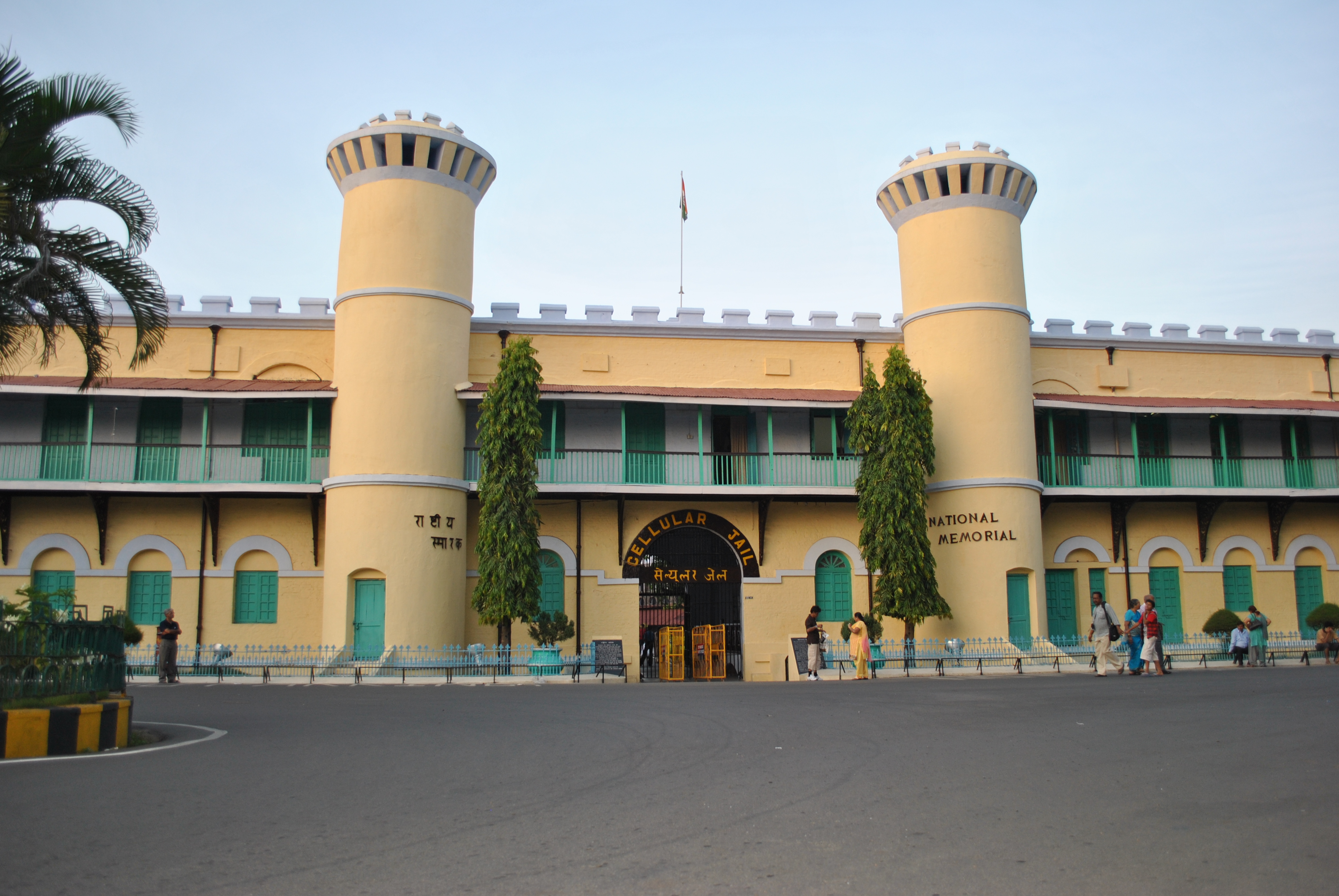
Cellular Jail
MonumentThe Cellular Jail, also known as 'Kala Pani', is a colonial prison in the Andaman and Nicobar Islands, India. Built by the British, it was primarily used to exile political prisoners to solitary confinement in its distinctive seven wings, each designed to prevent communication between inmates.
About Cellular Jail
The Cellular Jail, also known as 'Kala Pani', is a colonial prison in the Andaman and Nicobar Islands, India. Built by the British, it was primarily used to exile political prisoners to solitary confinement in its distinctive seven wings, each designed to prevent communication between inmates. The jail stands as a somber reminder of India's struggle for independence and the immense sacrifices made by countless freedom fighters. Today, it is a national memorial that draws visitors from across the globe, offering a poignant glimpse into the harsh realities faced by those imprisoned within its walls. The architecture itself is a testament to the British foresight in isolating and breaking the spirit of the incarcerated, with its radial design and central watchtower. A visit here is not just a tour, but an emotional journey into a significant chapter of Indian history.
History
Construction of the Cellular Jail began in 1896 and was completed in 1906. Its design was based on Jeremy Bentham's Panopticon, intended to allow guards to observe prisoners without the latter knowing whether they were being watched. The jail's primary purpose was to house Indian freedom fighters who opposed British rule. Famous revolutionaries like Veer Savarkar, Batukeshwar Dutt, and Yogendra Shukla were confined here, enduring brutal conditions, forced labor, and torture. The jail's Isolation through solitary confinement and the infamous 'oil mill' are well-documented aspects of its dark past. After India gained independence in 1947, two of its seven wings were demolished, a move that stirred controversy among historians and preservationists. In 1969, it was declared a National Memorial, preserving the remaining structure as a testament to the nation's fight for freedom and remembering the sacrifices of its political prisoners.
Highlights
- Experience the emotional Light & Sound Show detailing the jail's history.
- Explore the individual cells and understand the solitary confinement.
- Visit the Memorial Column dedicated to freedom fighters.
- See the Martyrs' Memorial to pay homage to the fallen.
- Observe the infamous oil mill where prisoners were forced to work.
- Learn about the painful history of 'Kala Pani' at the museum.
- Walk through the seven wings and central tower architecture.
- Reflect on India's independence struggle and the sacrifices made.
Visitor Information
Plan your visit to Cellular Jail.
Discover the heritage and culture of India.