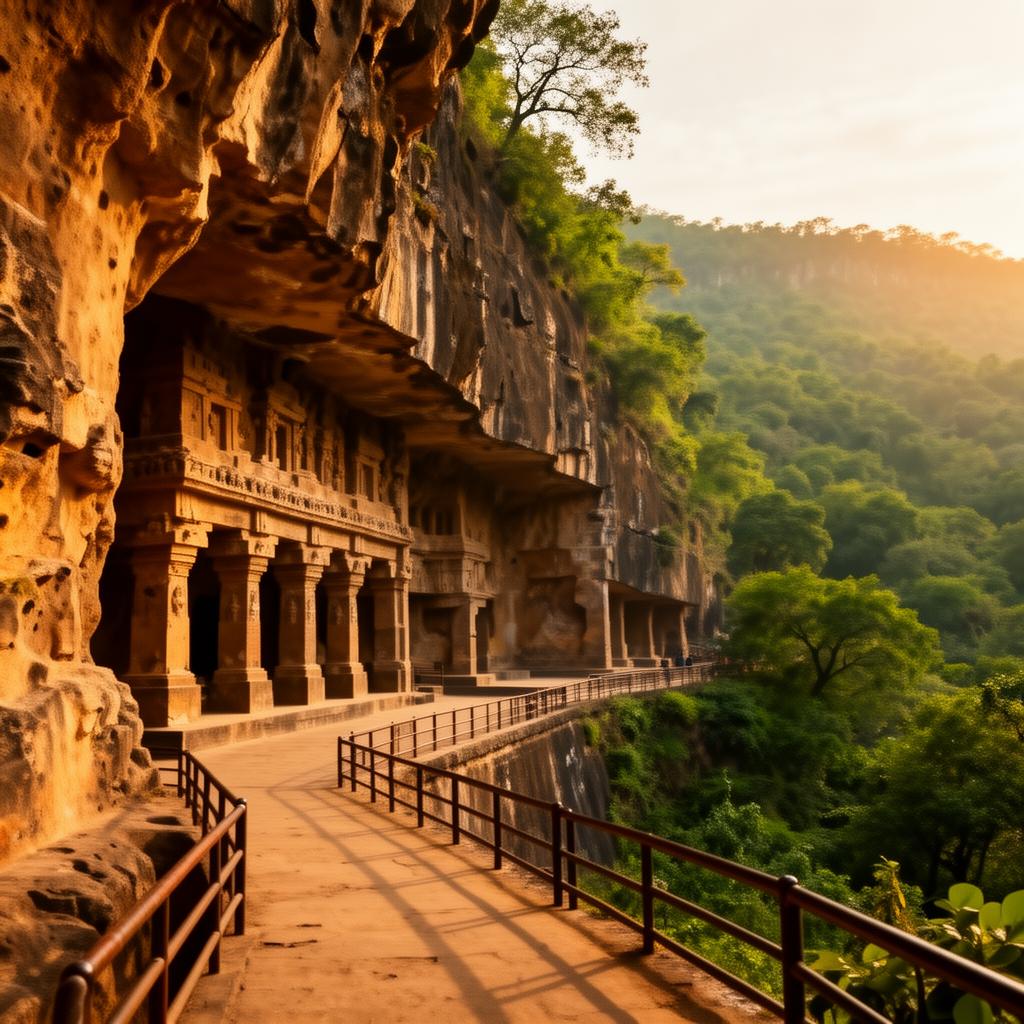
Capitol Complex (UNESCO)
HeritageThe Capitol Complex, nestled in the heart of Chandigarh, India, stands as an architectural marvel and a testament to modern urban planning. Designed by the visionary Swiss-French architect Le Corbusier, this UNESCO World Heritage site is a sprawling governmental campus that embodies the post-partition aspirations of independent India.
About Capitol Complex (UNESCO)
The Capitol Complex, nestled in the heart of Chandigarh, India, stands as an architectural marvel and a testament to modern urban planning. Designed by the visionary Swiss-French architect Le Corbusier, this UNESCO World Heritage site is a sprawling governmental campus that embodies the post-partition aspirations of independent India. It comprises three magnificent buildings: the Palace of Assembly, the Secretariat, and the High Court, each a masterpiece of reinforced concrete and Brutalist design. Beyond their functional purpose, these structures symbolize a new era of democratic governance and progressive thought. The complex is also home to iconic sculptures like the Open Hand Monument, a recurring motif in Le Corbusier's work, signifying 'the hand to give and the hand to take; peace and prosperity.' Visitors are drawn to its monumental scale, the interplay of light and shadow on its raw concrete surfaces, and the profound philosophical ideas embedded within its design.
History
The genesis of the Capitol Complex dates back to the partition of India in 1947, when Punjab lost its capital, Lahore, to Pakistan. A new capital for the Indian state of Punjab was urgently needed, leading to the conceptualization of Chandigarh as a meticulously planned city. In 1950, American architect Albert Mayer initially started work on the city plan, but after his associate's untimely death, the project was handed over to Le Corbusier in 1951. Le Corbusier, along with his team comprising Maxwell Fry, Jane Drew, and his cousin Pierre Jeanneret, undertook the monumental task of designing the city and its administrative heart. The Capitol Complex was envisioned as the symbolic head of the city, inspired by the human body metaphor, with the Head represented by the Complex. Construction began in the mid-1950s and continued for several years, becoming one of Le Corbusier's most significant works globally. Its recognition as a UNESCO World Heritage site in 2016 cemented its place among the world's most important architectural and urban planning achievements, acknowledging its universal value and influence on modern architecture.
Highlights
- Marvel at Le Corbusier's iconic Palace of Assembly
- Explore the impressive Secretariat building
- Visit the architecturally significant High Court
- Witness the symbolic Open Hand Monument
- Photograph the geometric beauty of the Martyrs' Memorial
- Observe the Chandigarh Tower and its unique design
- Experience the grand scale of modern urban planning
- Learn about Le Corbusier's architectural principles
- Enjoy guided tours for deeper insights (if available)
- Appreciate the interplay of light and concrete
Visitor Information
Plan your visit to Capitol Complex (UNESCO).
Discover the heritage and culture of India.