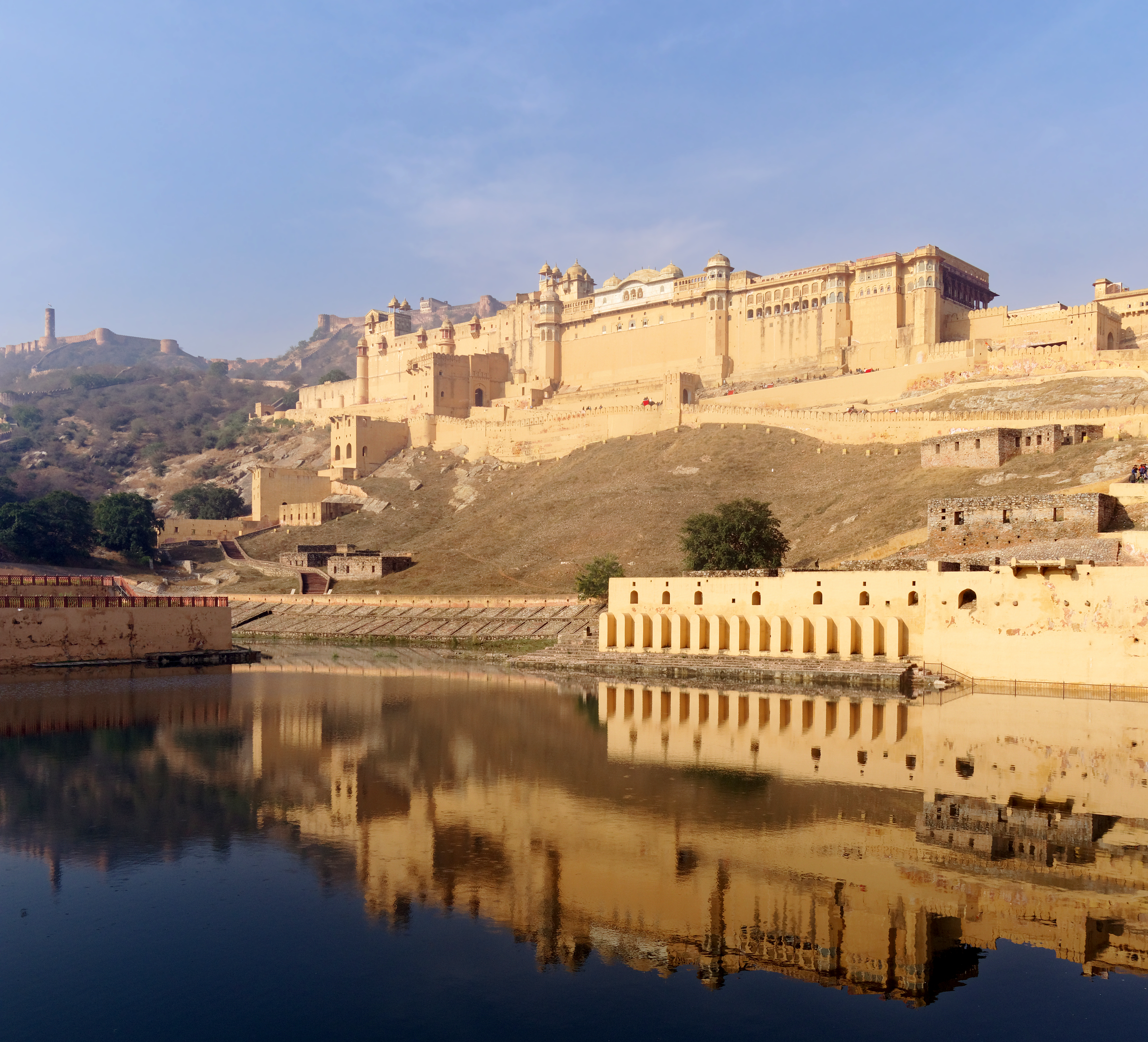
Amber Fort
FortAmber Fort, often pronounced Amer Fort, is a magnificent fortress-palace located in Amer, a town near Jaipur, Rajasthan, India. Perched high on a hill overlooking Maota Lake, this UNESCO World Heritage Site is an exemplary fusion of Rajput and Mughal architectural styles.
About Amber Fort
Amber Fort, often pronounced Amer Fort, is a magnificent fortress-palace located in Amer, a town near Jaipur, Rajasthan, India. Perched high on a hill overlooking Maota Lake, this UNESCO World Heritage Site is an exemplary fusion of Rajput and Mughal architectural styles. Built from pale yellow and pink sandstone, and white marble, the fort's grandeur is evident in its intricate carvings, expansive courtyards, and beautiful frescoes. Its strategic location offered natural defense, while its opulent interiors speak volumes about the artistic prowess and wealth of the Rajput rulers. Visitors can explore various sections like the Diwan-i-Aam (Hall of Public Audience), Diwan-i-Khas (Hall of Private Audience), Sheesh Mahal (Mirror Palace), and the Sukh Niwas (Hall of Pleasure) with its unique water-cooled climate control. A captivating elephant ride up to the fort entrance is a popular attraction, offering panoramic views of the surrounding Aravalli hills and the charming town below. Amber Fort is not just a structure but a living testament to India's rich royal heritage, attracting millions of tourists annually with its timeless beauty and historical allure.
History
The foundations of Amber Fort were laid in 1592 by Raja Man Singh I, a Kacchwaha Rajput king who was a trusted general of Emperor Akbar. However, the fort as it stands today was significantly expanded and renovated by his successors over a period of about two centuries, most notably by Mirza Raja Jai Singh I. The town of Amer served as the capital of the Kacchwaha Rajputs for over 700 years before Jaipur was built. The fort's strategic location on a hilltop provided a commanding view and defense against invaders. Its architecture reflects the gradual evolution of Rajput style, incorporating elements of Mughal design due to the close political and cultural ties between the Rajput rulers and the Mughal Empire. The fort's construction involved several phases, with each ruler adding their own unique touch to the various palaces, gates, and temples within the complex. The fortifications, palaces, gardens, and intricate decorative elements like mosaics and frescoes showcase the artistic and engineering skills of the period. Amber Fort remained the seat of power until the capital was shifted to Jaipur in 1727 by Maharaja Sawai Jai Singh II. Despite the shift, Amber Fort continued to be an important symbol of Rajput glory and a repository of their rich cultural heritage.
Highlights
- Take an elephant ride up to the fort entrance
- Explore the intricate Sheesh Mahal (Mirror Palace)
- Visit the serene Sukh Niwas with its unique climate control system
- Admire the Ganesh Pol, a beautifully painted gateway
- Discover the Diwan-i-Aam and Diwan-i-Khas
- Enjoy panoramic views of Maota Lake and the surrounding hills
- Walk through the intricate pathways and courtyards
- Attend the evening Light and Sound Show
- Explore the Amber Palace Museum
- Photograph the ornate frescoes and carvings
Visitor Information
Plan your visit to Amber Fort.
Discover the heritage and culture of India.